Mayflower Compact · November 11, 1620
"...having undertaken, for the glory of God, and advancement of the Christian faith... a voyage to plant the first colony... [we] covenant and combine ourselves together into a civil body politic."
Why it matters: the Pilgrims' first act ashore was a covenant of self-government, not a church-state establishment.
Yale Avalon Project → Virginia Statute for Religious Freedom · Enacted 1786
"...no man shall be compelled to frequent or support any religious worship, place, or ministry whatsoever... but that all men shall be free to profess... their opinions in matters of religion."
Author: Thomas Jefferson (1777, enacted 1786). Why it matters: the direct model for the First Amendment's religion clauses.
Library of Congress → Madison's Memorial and Remonstrance · 1785
"...Religion is wholly exempt from [civil society's] cognizance... it is proper to take alarm at the first experiment on our liberties."
Author: James Madison. Why it matters: defeated a Virginia bill to tax citizens for teachers of the Christian religion.
Founders' Constitution → United States Constitution · Article VI · 1787
"...no religious Test shall ever be required as a Qualification to any Office or public Trust under the United States."
Why it matters: the first federal safeguard against religious establishment, ratified before the Bill of Rights existed.
National Archives → First Amendment · Ratified 1791
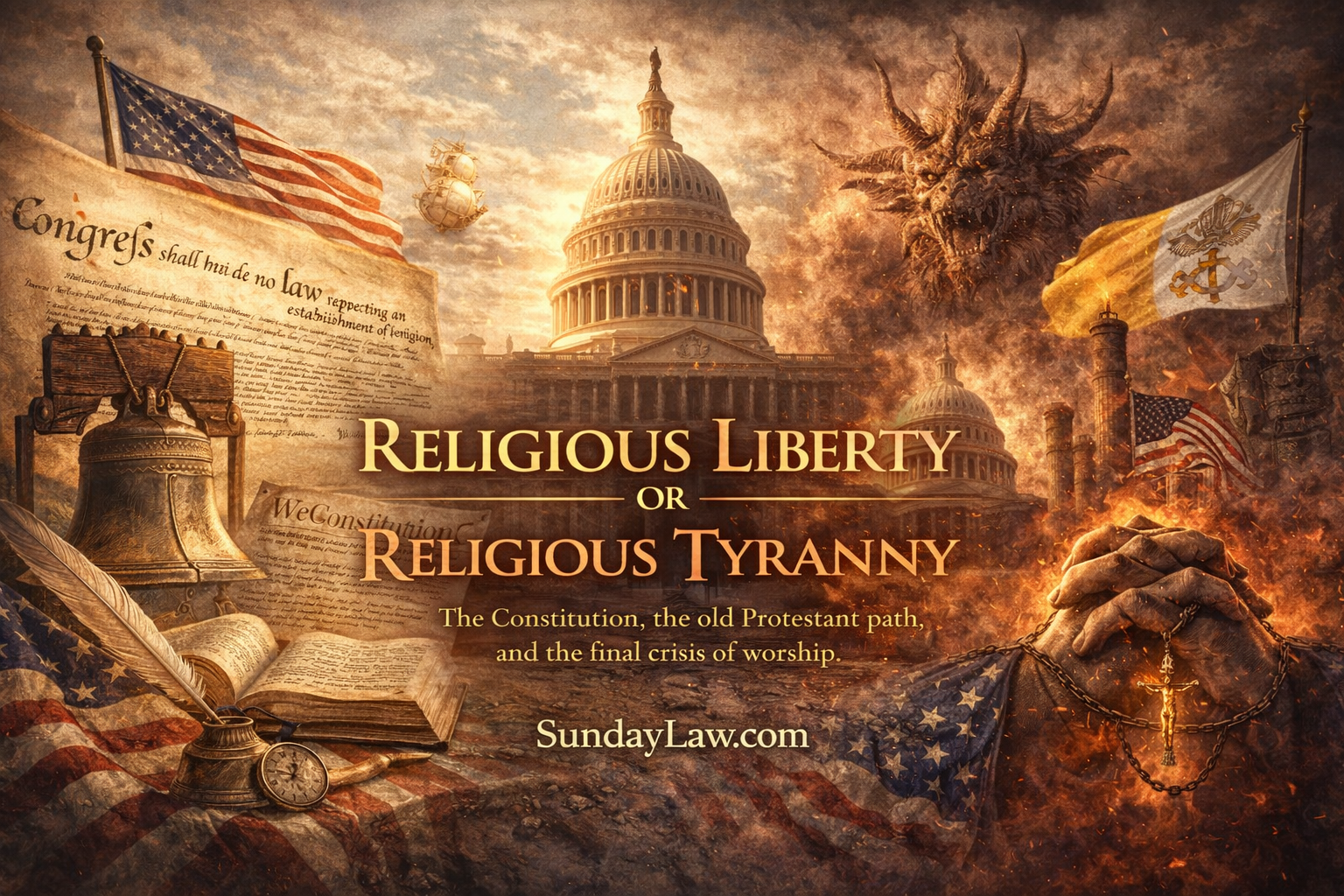
"Congress shall make no law respecting an establishment of religion, or prohibiting the free exercise thereof..."
Why it matters: the Establishment and Free Exercise Clauses — "two clauses, one fortress" around the conscience.
National Archives → Washington's Letter to the Hebrew Congregation, Newport · August 18, 1790
"...the Government of the United States... gives to bigotry no sanction, to persecution no assistance... every one shall sit in safety under his own vine and figtree."
Why it matters: citizenship as a natural right, not toleration granted by the state.
Library of Congress → Jefferson's Letter to the Danbury Baptist Association · January 1, 1802
"...religion is a matter which lies solely between Man and his God... I contemplate with sovereign reverence that act of the whole American people which declared that their legislature should 'make no law respecting an establishment of religion, or prohibiting the free exercise thereof,' thus building a wall of separation between Church and State."
Why it matters: the source of the famous "wall of separation" phrase — read in its full context, not as a bare slogan.
Library of Congress → Madison's Detached Memoranda · c. 1817–1832
"Strongly guarded as is the separation between Religion and Govt in the Constitution of the United States the danger of encroachment by Ecclesiastical Bodies, may be illustrated by precedents already furnished in their short history."
Why it matters: Madison's own late-life reflections questioning even chaplaincies and religious tax exemptions.
Founders' Constitution → George Mason's Virginia Declaration of Rights · June 12, 1776
"...all men are equally entitled to the free exercise of religion, according to the dictates of conscience."
Why it matters: one of the earliest state declarations of the free-exercise principle, predating the Declaration of Independence.
Yale Avalon Project → Not yet fully verified against original scans in this pass: Rhode Island's 1663 Royal Charter, Pennsylvania's 1701 Charter of Privileges, John Adams's Massachusetts correspondence, and the Treaty of Tripoli ratification record. See the final report below for the verification checklist.